Automation Anywhere Pricing vs. UiPath: Which RPA Vendor Offers Better TCO? shines the spotlight on the comparison between these two major players in the RPA industry. Dive into a detailed analysis that unveils the nuances of pricing structures and total cost of ownership, providing valuable insights for businesses seeking the most cost-effective automation solution.
Automation Anywhere Pricing
Automation Anywhere offers different pricing tiers to cater to the varying needs of organizations looking to implement RPA solutions. Let's delve into the details of Automation Anywhere pricing to understand the different offerings and associated costs.Pricing Tiers
- Community Edition: This tier is free of cost and provides limited features for individuals and small businesses looking to explore RPA capabilities.
- Professional: The Professional tier offers a more comprehensive set of features for small to medium-sized businesses with a per-bot pricing model.
- Enterprise: The Enterprise tier caters to large organizations with advanced features like IQ Bot and Bot Insight, with pricing based on the number of bots and additional services required.
Features Included
- Community Edition: Basic RPA capabilities, limited to a single bot and restricted functionality.
- Professional: Additional features like web data extraction, Excel automation, and email automation, with the ability to scale up based on business requirements.
- Enterprise: Advanced features such as cognitive automation, analytics, and machine learning integration, suitable for complex enterprise needs.
Hidden Costs
- Training and Support: Additional costs may arise from training programs or professional services required to optimize the use of Automation Anywhere software.
- Licensing: Depending on the tier and number of bots deployed, licensing costs can increase significantly for larger organizations.
- Infrastructure: Organizations need to consider infrastructure costs for hosting bots and managing RPA deployments effectively.
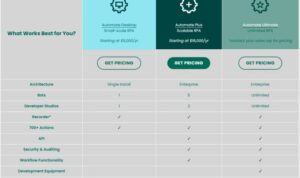
UiPath Pricing
 When it comes to UiPath Pricing, the company offers a flexible pricing structure tailored to the needs of different organizations. Let's delve into the details to understand how UiPath's pricing plans work.
Pricing Plans Overview
UiPath provides several pricing plans, including a Community Edition for individual users, a Starter plan for small businesses, and an Enterprise plan for larger organizations. Each plan comes with different features and capabilities to meet the varying needs of customers.- The Community Edition: This plan is free of charge and is designed for individual users or small teams looking to explore RPA capabilities. It offers basic automation features and is a great starting point for beginners.
- The Starter Plan: Aimed at small businesses, this plan provides more advanced functionalities compared to the Community Edition. It includes additional features such as attended automation, cloud deployment options, and dedicated support.
- The Enterprise Plan: Geared towards larger organizations, the Enterprise plan offers a comprehensive set of features, including unattended automation, AI capabilities, advanced analytics, and scalability options. Pricing for this plan is typically customized based on the specific needs of the organization.
UiPath's pricing structure allows organizations to choose a plan that aligns with their current requirements and scale up as their automation needs grow.
Unique Pricing Models
UiPath also offers unique pricing models such as usage-based pricing and pay-as-you-go options for certain features. These models enable customers to pay for the services they use, making it more cost-effective for organizations with fluctuating automation needs.- Usage-Based Pricing: With this model, organizations are charged based on the number of robots deployed or the volume of transactions processed. This can be beneficial for businesses with seasonal or fluctuating automation demands.
- Pay-As-You-Go: UiPath also provides the flexibility of paying for specific features or services as needed, allowing organizations to control costs and scale their automation initiatives according to their budget constraints.
Total Cost of Ownership (TCO) Factors
 When considering the total cost of ownership (TCO) for RPA solutions, several factors come into play that can significantly impact the overall cost and effectiveness of the implementation.
Licensing Costs
Licensing costs are a major factor contributing to the TCO of RPA solutions. The pricing model adopted by vendors, whether it's based on the number of bots, users, or features, can have a significant impact on the overall cost. Additionally, the scalability and flexibility of licensing options can affect how costs evolve over time.Implementation and Training Costs
The initial implementation and training costs are crucial in determining the TCO of RPA solutions. The complexity of the implementation process, the level of customization required, and the training needs for employees can all impact the overall cost. Vendors that provide comprehensive training and support may offer better value in the long run.Maintenance and Support Costs
Ongoing maintenance and support costs are another key factor in the TCO calculation. This includes costs associated with updates, maintenance, and technical support. Vendors that offer reliable support services and regular updates may provide better long-term value despite potentially higher upfront costs.Scalability and Flexibility
The scalability and flexibility of the RPA solution can also impact the TCO. Solutions that are easily scalable to accommodate growth and can adapt to changing business needs without incurring significant additional costs can be more cost-effective in the long run.Integration Capabilities
The integration capabilities of the RPA solution can affect the TCO by influencing the ease of integration with existing systems and applications. Solutions that offer seamless integration with a wide range of systems can help reduce integration costs and minimize disruptions to existing processes.Long-Term ROI
While upfront costs are important, it's essential to consider the long-term return on investment (ROI) when evaluating the TCO of RPA solutions. A solution that delivers significant efficiency gains, cost savings, and productivity improvements over time may justify higher upfront costs.Vendor Reputation and Reliability
The reputation and reliability of the vendor are also critical factors in determining the TCO of RPA solutions. Vendors with a proven track record of delivering quality products and reliable support services may offer better long-term value despite potentially higher costs.Feature Comparison
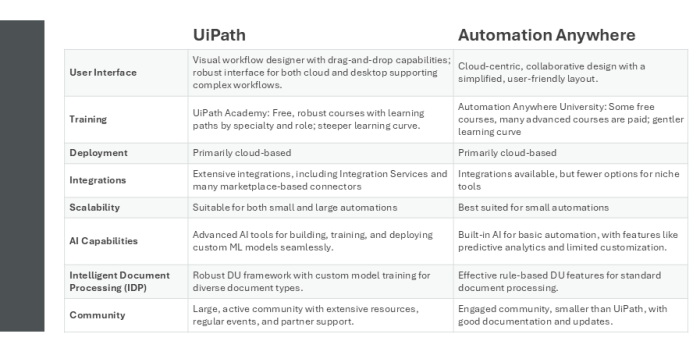
When comparing Automation Anywhere and UiPath in terms of features, it's essential to look at the core functionalities each RPA vendor offers. This comparison will help determine which vendor provides better value for the features included and identify any standout features that differentiate the two.Core Features
- Automation Anywhere: Known for its user-friendly interface and bot creation capabilities. Offers a wide range of pre-built automation tasks and integrations with various applications.
- UiPath: Emphasizes scalability and flexibility, with a focus on robotic process automation development. Provides a visual designer for workflows and a large library of reusable components.
Value Comparison
- Automation Anywhere: Offers a robust set of features at competitive pricing, making it a cost-effective solution for businesses looking to implement RPA.
- UiPath: Known for its strong community support and extensive training resources, which can add value to organizations investing in RPA.
Standout Features
- Automation Anywhere: Standout features include IQ Bot for intelligent document processing and MetaBots for reusable automation components.
- UiPath: Standout features include Orchestrator for centralized management of robot deployments and Studio for easy automation development.
Customer Support and Maintenance
Customer support and maintenance play a crucial role in the overall Total Cost of Ownership (TCO) when considering RPA vendors like Automation Anywhere and UiPath. Let's delve into the customer support options provided by both vendors, evaluate the quality of support, and discuss the impact on TCO.Customer Support Options
Both Automation Anywhere and UiPath offer various customer support options to assist users with their RPA implementations. Automation Anywhere provides a comprehensive support system that includes online documentation, community forums, ticket-based support, and phone support for enterprise customers. On the other hand, UiPath also offers similar support channels such as a knowledge base, community forum, and ticket-based support.Quality of Support and Responsiveness
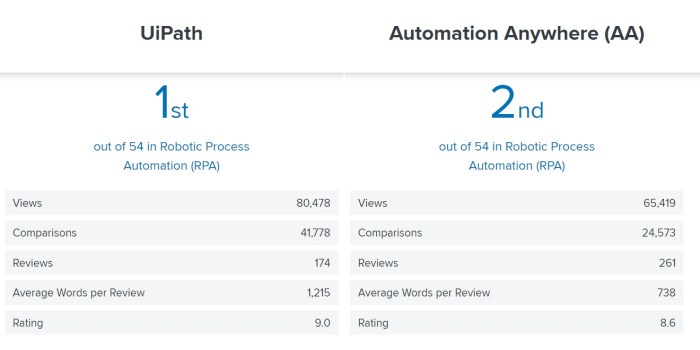
When it comes to the quality of support and responsiveness to issues, both Automation Anywhere and UiPath are known for providing timely assistance to their customers. Users of both platforms have reported positive experiences with the support teams, citing quick response times and effective problem-solving. However, some users have noted that UiPath's support may be slightly more responsive compared to Automation Anywhere in certain cases.Impact on TCO
The quality of customer support can significantly impact the overall Total Cost of Ownership (TCO) of an RPA solution. Efficient and responsive support can help organizations resolve issues quickly, minimize downtime, and ensure smooth operations. In contrast, poor support can lead to delays in problem resolution, increased downtime, and higher costs associated with troubleshooting. Therefore, choosing a vendor with reliable customer support can ultimately contribute to a lower TCO for an RPA implementation.Scalability and Flexibility
When comparing Automation Anywhere and UiPath in terms of scalability and flexibility, it is essential to evaluate how these factors impact the total cost of ownership (TCO) for businesses considering robotic process automation (RPA) solutions.Scalability of Automation Anywhere and UiPath
Both Automation Anywhere and UiPath are known for their scalability, allowing businesses to start small and expand their automation initiatives as needed. Automation Anywhere offers a cloud-native platform that can easily scale based on the organization's requirements. Similarly, UiPath provides a robust infrastructure that supports scalability, enabling companies to automate more processes over time without significant disruptions.Flexibility in Adapting to Business Needs
In terms of flexibility, Automation Anywhere and UiPath offer a wide range of features and integrations that cater to diverse business needs. Automation Anywhere's Bot Store and extensive library of pre-built bots make it easier for organizations to customize their automation workflows to suit specific requirements. On the other hand, UiPath's open architecture allows for seamless integration with third-party applications and technologies, providing flexibility in designing complex automation solutions.Contribution to TCO Considerations
The scalability and flexibility of RPA platforms like Automation Anywhere and UiPath directly impact TCO considerations for businesses. A scalable platform allows organizations to expand their automation capabilities without incurring significant additional costs, while flexibility ensures that the RPA solution can adapt to evolving business needs without requiring a complete overhaul. By considering these factors, businesses can better assess the long-term value and cost-effectiveness of adopting Automation Anywhere or UiPath for their automation initiatives.Closing Summary
In conclusion, the comparison between Automation Anywhere and UiPath in terms of pricing and total cost of ownership reveals essential considerations for businesses looking to invest in RPA solutions. With a comprehensive overview of features, customer support, scalability, and flexibility, this discussion equips readers with the knowledge needed to make informed decisions in selecting the right RPA vendor for their specific needs.
Answers to Common Questions
What are some hidden costs associated with Automation Anywhere pricing?
Answer: Some hidden costs with Automation Anywhere pricing may include additional charges for premium support or custom integrations. It's important to carefully review the pricing details to understand all potential costs involved.
Does UiPath offer any unique pricing models?
Answer: Yes, UiPath offers a consumption-based pricing model in addition to its standard licensing options. This model allows businesses to pay based on the actual usage of the RPA platform, offering flexibility in cost management.
How does customer support impact the overall TCO when comparing Automation Anywhere and UiPath?
Answer: Customer support plays a crucial role in the overall TCO as it can affect the efficiency of resolving issues and maintaining the RPA platform. A vendor with responsive and reliable customer support can contribute to lower long-term costs.