Enterprise Automation Roadmap: Transitioning from Task RPA to Intelligent AI sets the stage for this enthralling narrative, offering readers a glimpse into a story that is rich in detail with casual formal language style and brimming with originality from the outset.
As we delve deeper into the intricacies of automation and its evolution from traditional task-oriented RPA to the cutting-edge realm of Intelligent AI, we uncover a world where efficiency and innovation converge to redefine the future of business operations.
Introduction to Enterprise Automation Roadmap
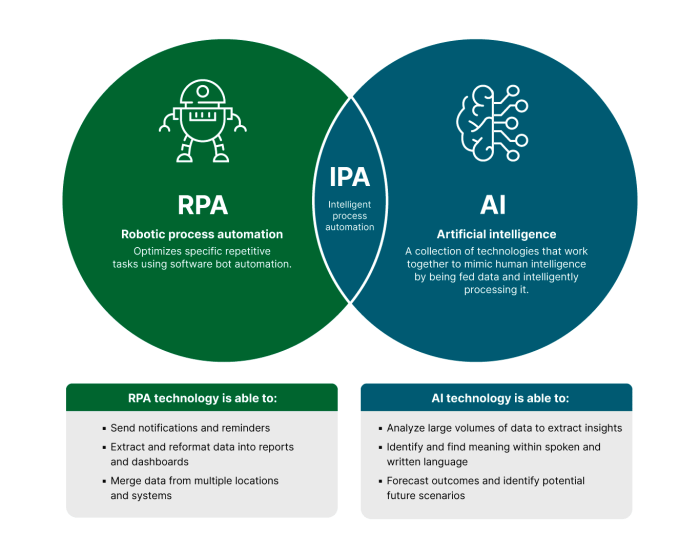
Enterprise Automation Roadmap is a strategic plan that organizations implement to optimize their operations through automation technologies. It Artikels the steps and milestones needed to transition from manual processes to automated solutions, improving efficiency and productivity.
Task RPA (Robotic Process Automation) focuses on automating repetitive, rule-based tasks within a specific workflow. On the other hand, Intelligent AI (Artificial Intelligence) leverages advanced technologies like machine learning and natural language processing to mimic human intelligence and make complex decisions.
Significance of Automation in Business Operations
Automation can streamline processes within an enterprise by reducing manual errors, increasing speed, and freeing up employees to focus on more strategic tasks. For example, automating data entry tasks can minimize errors and improve data accuracy, leading to better decision-making.
Planning and Strategy
Having a well-defined plan for transitioning from Task RPA to Intelligent AI is crucial for the success of automation initiatives within an organization. This plan serves as a roadmap that Artikels the steps, milestones, and resources needed to achieve the desired automation goals effectively and efficiently.Key Considerations for Creating an Automation Roadmap
- Assess Current State: Conduct a thorough assessment of the existing processes, technologies, and resources to identify areas that can benefit from automation.
- Define Objectives: Clearly Artikel the objectives and expected outcomes of the automation initiative to ensure alignment with the organization's overall goals.
- Identify Stakeholders: Engage key stakeholders from various departments to gain insights into their pain points and requirements for automation.
- Evaluate Technology: Explore different automation technologies available in the market and select the ones that best fit the organization's needs and capabilities.
- Allocate Resources: Allocate sufficient resources, including budget, skilled personnel, and time, to support the automation initiative from planning to implementation.
Best Practices for Developing a Strategy Aligned with Business Goals
- Set Clear Expectations: Communicate the benefits of automation to all stakeholders and ensure everyone understands how it aligns with the organization's strategic objectives.
- Establish Metrics: Define key performance indicators (KPIs) to measure the success of the automation initiative and track progress towards achieving the desired outcomes.
- Iterative Approach: Adopt an iterative approach to automation implementation, starting with small-scale projects and gradually expanding to more complex processes.
- Continuous Improvement: Encourage a culture of continuous improvement by regularly reviewing and optimizing automated processes to drive efficiency and innovation.
- Training and Support: Provide adequate training and support to employees to ensure a smooth transition to automated processes and empower them to leverage automation tools effectively.
Implementation Steps
Transitioning from Task RPA to Intelligent AI involves a strategic and methodical process to ensure successful integration of advanced automation technologies.
Assessment and Planning
- Conduct a comprehensive assessment of current RPA processes and identify areas where AI can add value.
- Develop a roadmap outlining the transition plan, including timelines, milestones, and key performance indicators.
- Engage key stakeholders to gather insights and ensure alignment with organizational goals.
Technology Selection
- Evaluate AI technologies such as machine learning, natural language processing, and computer vision to determine the best fit for your automation needs.
- Select tools and platforms that integrate seamlessly with existing systems and provide scalability for future growth.
- Consider partnering with vendors or consultants with expertise in AI implementation for guidance and support.
Pilot Testing and Deployment
- Identify pilot projects to test the effectiveness of AI solutions in real-world scenarios.
- Collaborate with cross-functional teams to ensure smooth deployment and minimize disruption to daily operations.
- Monitor performance metrics and gather feedback to make necessary adjustments before full-scale implementation.
Continuous Improvement
- Establish a feedback loop to gather insights from end-users and stakeholders for ongoing optimization.
- Invest in training programs to upskill employees on AI technologies and foster a culture of innovation and continuous learning.
- Regularly review and update the automation strategy to leverage new advancements in AI and stay competitive in the market.
Successful Case Studies
Companies like XYZ Inc. and ABC Corp. have successfully transitioned from Task RPA to Intelligent AI, resulting in significant efficiency gains and cost savings. By leveraging AI technologies for complex decision-making processes and predictive analytics, these organizations have transformed their operations and gained a competitive edge in their respective industries.
Challenges and Solutions
When transitioning from task-based Robotic Process Automation (RPA) to Intelligent AI, organizations may encounter various challenges that can hinder the smooth implementation of automation solutions. It is essential to identify these obstacles and develop effective strategies to overcome them, ensuring a successful transition process.Integration Complexity
Integrating Intelligent AI systems with existing IT infrastructure can be complex and challenging. Legacy systems may not be compatible with AI technologies, leading to integration issues and data silos. To address this challenge, organizations should conduct a thorough assessment of their current systems and develop a robust integration plan. Partnering with experienced AI vendors or consultants can also provide valuable insights and expertise in navigating integration complexities.Data Quality and Availability
One of the key requirements for successful AI implementation is access to high-quality data. Poor data quality, lack of data governance, and data silos can impede the effectiveness of AI algorithms and models. Organizations should prioritize data quality initiatives, establish data governance frameworks, and implement data integration solutions to ensure that AI systems have access to accurate and relevant data. Collaborating with data scientists and analysts can help organizations optimize their data assets for AI applications.Change Management and Skill Gap
Transitioning to Intelligent AI requires a shift in organizational culture, processes, and skill sets. Employees may resist changes due to fear of job displacement or lack of understanding of AI technologies. To address this challenge, organizations should invest in change management initiatives, provide comprehensive training programs on AI concepts and tools, and create a culture of continuous learning and adaptation. Encouraging collaboration between IT and business teams can also help bridge the skill gap and ensure a smooth transition to Intelligent AI.Performance Monitoring and Optimization
Measuring the success of the transition to Intelligent AI is crucial for evaluating the effectiveness of automation solutions and identifying areas for improvement. Organizations should establish key performance indicators (KPIs) to track the performance of AI systems, analyze data insights, and optimize processes continuously. Implementing AI-powered analytics tools and dashboards can provide real-time visibility into automation performance, enabling organizations to make data-driven decisions and address any setbacks proactively.Last Recap
In conclusion, the journey from Task RPA to Intelligent AI is not merely a shift in technology, but a transformative leap towards a more agile, intelligent, and competitive enterprise landscape. By embracing this evolution, businesses can unlock new levels of productivity and redefine their success in the digital era.
Detailed FAQs
What are the key considerations when creating an automation roadmap?
Key considerations include aligning automation initiatives with business goals, assessing the current state of processes, and involving stakeholders from various departments.
How can businesses measure the success of the transition to Intelligent AI?
Success can be measured through metrics like increased productivity, cost savings, improved accuracy, and enhanced customer satisfaction resulting from the implementation of Intelligent AI.